Pandan leaves (Pandanus amarylifolius) are large, elongated, narrow, and oblong in shape. They come from the pandan tree, known as screwpine in English, which are palm-like in appearance and native to tropical as well as sub-tropical regions.
In the Philippines, pandan leaves are locally known for their fragrance and as the main dessert to a favorite dessert: buko pandan.
For the proprietor of a Laguna-based business that sells eco-bags in the Philippines, there’s more to pandan leaves than just being for consumption.
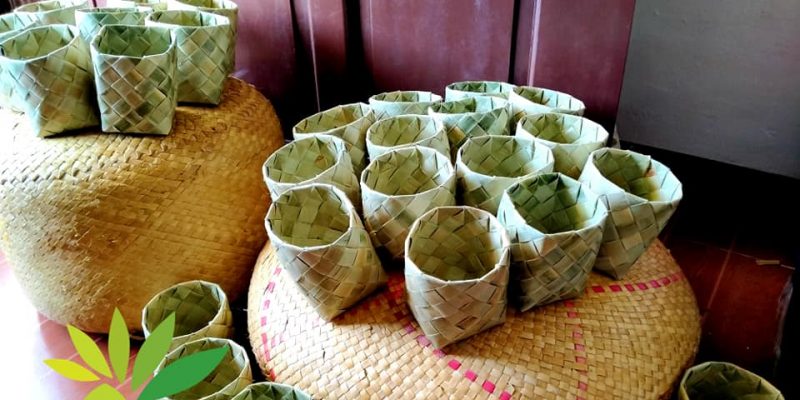
Creating pandan planters
According to Lombendencio, pandan leaves undergo a process before they’re turned into planters or baskets and each step has a specific term. The gathering of pandan leaves is called pananagpas, while the removal of thorns from its leaves is known as paghihininik, and the process of cutting the pandan leaves into the desired size for weaving is called paglilinas.