DA highlights women’s leadership in agriculture and development during National Women’s Month

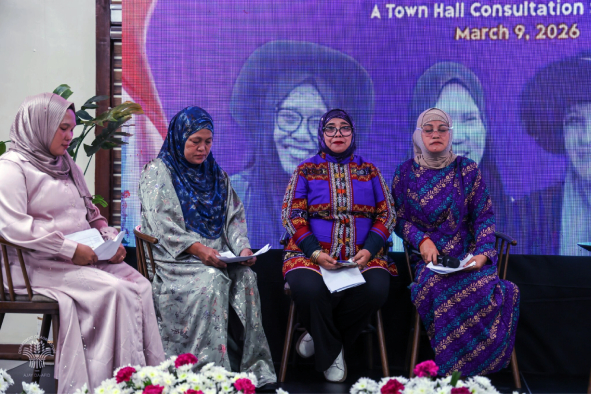
The Department of Agriculture (DA) recognized the important contributions of women to agriculture, community development, and national progress during the opening ceremony of the 2026 National Women’s Month Celebration on March 9.
The event also coincides with the International Year of the Woman Farmer 2026, declared by the Food and Agriculture Organization (FAO), highlighting the role of women in strengthening food security and supporting rural economies.
This year’s celebration carries the theme “WE for Gender Equality and an Inclusive Society,” which aligns with the country’s Philippine Development Plan 2023–2028 and the Bagong Pilipinas vision of Ferdinand Marcos Jr.. The sub-theme, “Lead like the Babaylans, Filipinas!”, draws inspiration from the leadership of the babaylan—female spiritual leaders and healers in pre-colonial Philippine society.
Speaking on behalf of the DA executive committee, Assistant Secretary Genevieve Velicaria-Guevarra said the babaylans exemplified leadership rooted in wisdom, empathy, and moral guidance.
“Like the babaylans, today’s Filipinas are called to lead with courage and compassion. Achieving gender equality requires all of us working together to create a fair and inclusive society,” she said.
The celebration also connects with the Philippines’ upcoming role as chair of the Association of Southeast Asian Nations (ASEAN) in 2026, as well as preparations for the ASEAN Women Leaders Summit, where Filipino women are expected to help advance inclusive governance and community development in the region.
The FAO’s declaration of the International Year of the Woman Farmer aims to promote fair and sustainable agri-food systems by ensuring that women and girls in agriculture gain better access to resources, training, and decision-making opportunities. The initiative also encourages investment to close gender gaps and strengthen women’s livelihoods across the agricultural value chain.
Agriculture Secretary Francisco P. Tiu Laurel Jr. has pledged to pursue policy reforms that will address gender disparities in agriculture. Meanwhile, DA Undersecretary Nora Oliveros emphasized that empowering women farmers is not only a social goal but also an economic strategy.
According to Oliveros, giving women equal access to resources can increase farm productivity and income, improve nutrition in households, and contribute to more stable communities.
As part of the month-long celebration, the DA launched several initiatives to highlight women’s contributions in agriculture. These include “Purple Wednesdays,” where DA employees wear purple to show support for gender equality, and an Agri-Bazaar at the DA Central Office featuring products from women-led enterprises.
The DA also opened the “Breaking Barriers” Photo Exhibit, organized by the Department of Agriculture – Agricultural Information and Communication Service. The exhibit tells the stories of Muslim women leaders from conflict-affected areas in Mindanao.
Among those featured are Crystal Ali Solaiman of Palimbang, Sultan Kudarat, a national winner of the Search for Outstanding Rural Women in 2019; Amenah Taratingan, a cooperative specialist and mentor of the From Arms to Farms Program in Kauswagan, Lanao del Norte; and program beneficiaries Inoya Mangompia and Zanayra Sarip from Munai, Lanao del Norte.
These women also shared their experiences during the Women in Agriculture Break Barriers: A Town Hall Consultation, held at the Agricultural Training Institute in Quezon City. The event featured stories of resilience among women farmers and community leaders who have faced poverty, gender inequality, and armed conflict.
By recognizing both the historical leadership of the babaylan and the resilience of modern women farmers, the DA emphasized that women are not only partners in development but also key drivers of agricultural progress and social transformation.
NPO News Team | DA Press Office - PR