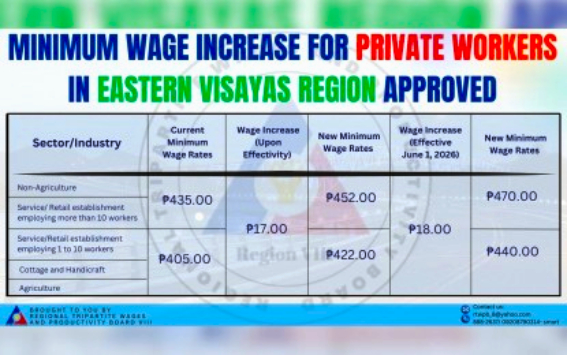
Get responses tailored to you Log in to get answers based on saved chats, plus create images and upload files. Log in Uploaded image can you rewrite this agri-news and its header: DA expands P20 rice rollout in Samar, Leyte PALO, Leyte (March 27, 2026)— The Department of Agriculture (DA) has intensified the rollout of its P20-per-kilo rice initiative, “Benteng Bigas, Meron Na!”, with back-to-back distributions in Leyte and Samar, reaching thousands of beneficiaries and reinforcing efforts to ensure affordable food for vulnerable sectors. In Palo, Leyte, more than 5,000 individuals received subsidized rice under the program. Beneficiaries included farmers, fisherfolk, transport workers such as tricycle and jeepney drivers, minimum wage earners, and indigent households. The DA said the program is expected to expand further, with up to 15,000 individuals listed under the Provincial Local Government Unit’s registry targeted in the coming days. Simultaneously, around 2,000 qualified beneficiaries in Sta. Rita, Samar, also availed of the low-cost rice through a coordinated rollout with the provincial government. Alongside rice distribution, KADIWA ng Pangulo sellers—composed largely of farmers’ cooperatives and associations—offered fresh vegetables, processed food, and other value-added products. The initiative not only supplemented household food needs but also created additional income streams for local producers. Agriculture Assistant Secretary Genevieve Velicaria-Guevarra said the program has contributed to stabilizing palay prices during the harvest season. She noted that the National Food Authority continues to procure palay at fair prices while releasing rice stocks through KADIWA outlets and P20 distribution channels. “The P20 Rice Program has helped provide better returns for farmers while ensuring affordable rice for consumers,” she said, adding that the strategy encourages sustained planting and supports long-term food security. Agriculture Secretary Francisco P. Tiu Laurel Jr. underscored the importance of the initiative, describing it as a cornerstone of President Ferdinand Marcos Jr.’s food security agenda. “In these challenging times, this flagship program of President Marcos ensures that no Filipino family is left behind when it comes to access to affordable rice, while at the same time safeguarding the welfare of our farmers,” Tiu Laurel said. The DA said the successive rollouts highlight the government’s commitment to maintaining a stable, sufficient, and accessible rice supply, particularly for low-income households, while strengthening support for Filipino farmers. President Marcos has directed the DA to extend the targeted rice program until the end of his term in June 2028. The DA is expanding the food program’s footprint to benefit as many as 60 million Filipinos by this year’s end. and what its sub category? Rewritten Headline: DA ramps up ?20 rice program in Samar and Leyte Rewritten Article: PALO, Leyte (March 27, 2026) — The Department of Agriculture (DA) has stepped up the implementation of its ?20-per-kilo rice initiative, “Benteng Bigas, Meron Na!”, with consecutive distribution activities in Leyte and Samar, benefiting thousands of residents and strengthening efforts to make staple food more affordable for vulnerable groups. In Palo, Leyte, over 5,000 beneficiaries received subsidized rice through the program. Those who benefited included farmers, fisherfolk, transport workers such as tricycle and jeepney drivers, minimum wage earners, and low-income families. The DA said the rollout will continue to expand, with around 15,000 more individuals from the provincial government’s registry expected to receive assistance in the coming days. At the same time, about 2,000 qualified beneficiaries in Sta. Rita, Samar accessed the affordable rice through a joint effort with the local government. KADIWA ng Pangulo outlets were also present during the distribution, offering fresh produce, processed goods, and other agricultural products from farmers’ groups and cooperatives. This helped supplement household food supplies while providing additional income opportunities for local producers. According to Agriculture Assistant Secretary Genevieve Velicaria-Guevarra, the initiative has also helped stabilize palay prices during the harvest season. She explained that the National Food Authority continues to buy palay at fair prices while releasing rice stocks through KADIWA outlets and the ?20 rice program. She added that the initiative supports both farmers and consumers by ensuring fair earnings for producers and affordable food for the public, while encouraging continuous agricultural production. Agriculture Secretary Francisco P. Tiu Laurel Jr. emphasized that the program is a key component of President Ferdinand Marcos Jr.’s food security strategy. He said the initiative ensures Filipino families have access to affordable rice while also protecting the livelihoods of farmers. The DA highlighted that the continued rollout reflects the government’s commitment to maintaining a stable and accessible rice supply, particularly for low-income communities, while strengthening support for the agriculture sector. President Marcos has instructed the DA to sustain the targeted rice program through the end of his term in June 2028, with a goal of reaching up to 60 million Filipinos by the end of this year. Suggested Subcategory: PROVINCIAL Fuel costs squeeze Benguet farmers, DA intervenes BAGUIO CITY—Agriculture Secretary Francisco P. Tiu Laurel Jr. on Wednesday, April 1, met with vegetable farmers, truckers, and local officials from Benguet, Tinoc, Ifugao and Bauko, Mountain Province, to confront surging fuel prices that are driving up transport costs, squeezing farm incomes, and threatening vegetable supply and prices. The dialogue at the Benguet Agri-Pinoy Trading Center focused on mounting logistical pressures linked to rising global oil prices amid escalating tensions in the Middle East, and the Department of Agriculture’s (DA) planned response. Stakeholders said the freight expenses of vegetables from farm to the trading centers and to the market destinations have doubled to tripled since the conflict began. From the usual 2-toner truck, the farmers in Buguias shared that the P4,000 fuel expenses increased spending to P8,000 at present. The truckers association also said that their fuel cost increased from 15k per trip to 35k per trip from La Trinidad trading centers to Metro Manila. The spike could add roughly P1-2 per kilogram of vegetables shipped to Metro Manila based on fuel costs alone. Tiu Laurel said the DA is preparing a fuel subsidy program for truckers to help stabilize deliveries and cushion the impact on both transporters and farmers. “DA has to really exert efforts with the LGUs to determine what a municipality or province lacks, so these can be complemented by surplus produce from areas with full harvesting capacity to maximize our food supply,” he said. Tiu Laurel assured the public that the country’s overall food supply remains stable despite current pressures. For immediate relief, the DA has deployed existing DA managed trucks and coordination with FCA and LGU managed trucks, to haul vegetables from farms to trading posts or to markets directly, with fuel expenses covered by the agency. Regional Director Jennilyn Dawayan said efforts are also underway to expand market access. “We are intensifying the search for market linkages where LGU and FCA reported vegetables can be sold, in collaboration with other DA regional offices,” she said. Another round of talks is set after Holy Week, in partnership with the Office of the Logistics, Food Terminal Inc. and other DA key officials, to refine interventions for farmers and transport operators. Meanwhile, Tiu Laurel noted that the government’s P20 rice program is gaining traction, with offtake doubling in recent weeks, and said it will be expanded to help ease the burden on consumers as fuel costs rise. The agriculture chief emphasized that close coordination between national agencies and local governments will be crucial to stabilizing food distribution and protecting both producers and consumers. Rewritten Headline: Rising fuel prices strain Benguet farmers; DA rolls out support measures Rewritten Article: BAGUIO CITY — Agriculture Secretary Francisco P. Tiu Laurel Jr. met with vegetable farmers, truckers, and local officials from Benguet, Tinoc in Ifugao, and Bauko in Mountain Province on Wednesday, April 1, to address the impact of soaring fuel prices on the agriculture sector. The meeting, held at the Benguet Agri-Pinoy Trading Center, centered on rising transport costs driven by increasing global oil prices linked to tensions in the Middle East, and the Department of Agriculture’s (DA) response to these challenges. Stakeholders reported that freight costs for transporting vegetables from farms to trading hubs and markets have surged significantly—doubling or even tripling in recent weeks. Farmers from Buguias noted that fuel expenses for a 2-ton truck rose from ?4,000 to ?8,000. Meanwhile, truckers said costs for trips from La Trinidad to Metro Manila jumped from ?15,000 to ?35,000. These increases could raise vegetable prices by around ?1 to ?2 per kilogram based on fuel costs alone. In response, Tiu Laurel said the DA is preparing a fuel subsidy program for truckers to help stabilize deliveries and ease the burden on both transporters and farmers. He emphasized the need for stronger coordination with local government units (LGUs) to balance supply, ensuring areas with shortages can be supported by regions with surplus production. Despite the challenges, the agriculture chief assured the public that the country’s overall food supply remains stable. As an immediate intervention, the DA has deployed its own fleet of trucks, along with vehicles managed by farmers’ cooperatives and LGUs, to transport vegetables from farms to trading centers and markets, with fuel costs shouldered by the agency. Regional Director Jennilyn Dawayan said the DA is also working to widen market access by strengthening linkages between producers and potential buyers in coordination with other regional offices. Further discussions are scheduled after Holy Week, involving the Food Terminal Inc. and other DA officials, to refine additional support measures for farmers and transport operators. Tiu Laurel also noted that the government’s ?20 rice initiative continues to gain momentum, with demand increasing in recent weeks, and said it will be expanded to help ease the impact of rising fuel costs on consumers. He underscored that sustained coordination between national agencies and local governments will be key to stabilizing food distribution and protecting both farmers and consumers. Suggested Subcategory: PROVINCIAL Alternative energy, petroleum reserve policy pushed amid oil crisis MANILA – Chair of the House of Representatives Ways and Means Committee, Marikina 2nd District Rep. Miro Quimbo, said Wednesday the Philippines must pursue alternative sources of energy and establish a national petroleum reserve – long-term measures that will help the country cushion the impact of oil price shocks and mitigate disruptions in petroleum supply. In a news release, Quimbo said the ongoing oil crisis triggered by the war in Iran should serve as a “wake-up call” for the country, as its heavy reliance on imported petroleum products has made it extremely vulnerable to geopolitical events beyond its control. Among the measures being explored is the accelerated development of domestically available alternative energy sources, such as geothermal and natural gas. “We need to be able to fast-track these alternative sources of energy because this is how we are (going) to thrive or survive this,” he said. Along with the urgent shift to alternative energy sources, Quimbo is pushing for the government to establish a national fuel reserve to prepare and protect the country against future oil crises. He expressed hope that these measures would be taken up before the adjournment of the First Regular Session in the first week of June. On Sunday, House Speaker Faustino “Bojie” Dy III convened the chairpersons of 13 House committees for an emergency meeting to craft a unified, resilient government response to the ongoing oil price crisis and similar future shocks. These committees are agriculture, appropriations, aquaculture and fisheries resources, economic affairs, energy, foreign affairs, information and communications technology, labor and employment, overseas workers affairs, social services, trade and industry, transportation, and ways and means. Rewritten Headline: Lawmakers push alternative energy, fuel reserve amid oil crisis Rewritten Article: MANILA — Miro Quimbo, chair of the House Ways and Means Committee and representative of Marikina’s 2nd District, is urging the government to accelerate the development of alternative energy sources and establish a national petroleum reserve to shield the country from oil price shocks. In a statement released Wednesday, Quimbo said the ongoing oil crisis linked to tensions involving Iran highlights the Philippines’ vulnerability due to its heavy dependence on imported fuel. He described the situation as a “wake-up call,” stressing the need for long-term strategies to ensure energy security and reduce exposure to global disruptions. Among the proposed solutions is the faster development of locally available energy sources such as geothermal power and natural gas. “We need to fast-track these alternative energy sources if we want to remain resilient in times like this,” Quimbo said. Alongside this, he is also advocating for the creation of a national fuel reserve, which would allow the country to maintain buffer stocks and better manage supply during future crises. Quimbo expressed hope that both measures could be tackled before the First Regular Session of Congress adjourns in early June. Meanwhile, Faustino “Bojie” Dy III convened leaders of 13 House committees for an emergency meeting to develop a coordinated government response to the oil price surge and similar future disruptions. The committees involved include those on agriculture, appropriations, aquaculture and fisheries, economic affairs, energy, foreign affairs, information and communications technology, labor and employment, overseas workers affairs, social services, trade and industry, transportation, and ways and means. Lawmakers emphasized that a unified and forward-looking approach will be critical in strengthening the country’s resilience against global energy shocks. Suggested Subcategory: NATIONAL DA: Fertilizer supply stable, pushes biofertilizers use amid ME crisis MANILA – Department of Agriculture (DA) Secretary Francisco Tiu Laurel Jr. has assured that fertilizer supply in the country remains stable despite escalating tensions in the Middle East, as the agency ramps up the use of alternative sources to cushion the impact of rising global prices. In a news release Wednesday, Tiu Laurel said the country’s exposure to supply disruptions is limited but noted that higher oil and freight costs are expected to drive up fertilizer prices following tensions affecting key trade routes such as the Strait of Hormuz. “I reviewed all the figures on where our fertilizer comes from… supply is not the issue —it’s really the price,” he said. He added that to cushion the impact, the DA is now prioritizing alternatives to reduce reliance on imported and inorganic fertilizers and advance the broader goal of sustainable, food-secure agriculture by boosting farm yields. During his visit to the Agri Specialists Inc. facility in Santa Rosa, Laguna with Senator Francis Pangilinan on Tuesday, Tiu-Laurel highlighted locally produced biofertilizers. He said the product, developed by researchers from the University of the Philippines Los Baños National Institute of Molecular Biology and Biotechnology, can replace up to two 50-kilogram bags of urea fertilizer per kilogram. “A kilo of the biofertilizer, based on company estimates, could replace two 50-kilo bags of urea-based fertilizer. Each kilogram costs PHP750 —roughly a third of the current price of around PHP2,500 of a single bag of complete 14-14-14 fertilizer,” he said. Tiu-Laurel said the DA has been promoting biofertilizers, liquid fertilizers, and soil ameliorants even before the US and Israel airstrike on Iran in February 2026, which pushed oil prices higher as it heightened concerns over global supply chains. Data show that only about 20 percent of the country’s 713,000 metric tons of imported urea-based fertilizers in 2025 came from Qatar and Saudi Arabia. He said the bulk of supplies was sourced from Asian countries such as Indonesia, Brunei, Malaysia, China, and Vietnam. Meanwhile, imports of ammonium sulfate fertilizers were entirely from China and Japan, further reducing dependence on Middle Eastern routes. However, despite stable supply, the DA estimates that higher fertilizer and transport costs could push food prices up by PHP2 to PHP5 per kilogram, with rice expected to be the most affected due to its heavy fertilizer requirements. The DA said field trials indicate that farmers can cut urea use by half or more without sacrificing yields, helping offset rising input costs. “If you used to apply 10 sacks of urea, you might now be able to use only half or even just three,” Tiu-Laurel said, citing successful trials using bio-based and nanotechnology-driven solutions. Meanwhile, Pangilinan said the energy crisis caused by the ongoing conflict in the Middle East could also threaten the country’s food security if left unaddressed, particularly given its impact on fertilizer supply, noting that the DA’s budget was already insufficient before the crisis. Given the situation, Pangilinan called for a review of the 2026 national budget, adding that senators are prepared to pass a supplemental budget if necessary. Tiu Laurel assured that the government will continue scaling up alternative inputs and other interventions to help stabilize production and protect consumers from sharper price increases amid the ongoing Middle East crisis. Rewritten Headline: DA assures steady fertilizer supply, promotes biofertilizers amid Middle East tensions Rewritten Article: MANILA — Agriculture Secretary Francisco P. Tiu Laurel Jr. assured that the country’s fertilizer supply remains stable despite rising tensions in the Middle East, as the Department of Agriculture (DA) intensifies efforts to promote alternative inputs to offset increasing global prices. In a statement released Wednesday, Tiu Laurel said supply disruptions are not a major concern, but higher oil and shipping costs are expected to push fertilizer prices upward, particularly with key trade routes like the Strait of Hormuz under pressure. “Supply is not the issue—it’s really the price,” he emphasized, noting that the DA is shifting focus toward reducing dependence on imported and inorganic fertilizers while supporting long-term agricultural sustainability and productivity. During a visit to Agri Specialists Inc. with Francis Pangilinan, the agriculture chief highlighted locally produced biofertilizers developed by researchers from the University of the Philippines Los Baños National Institute of Molecular Biology and Biotechnology. He explained that one kilogram of biofertilizer can potentially replace up to two 50-kilogram bags of urea fertilizer. Priced at around ?750 per kilogram, it is significantly cheaper compared to the roughly ?2,500 cost of a single bag of complete fertilizer. The DA has been promoting biofertilizers, liquid fertilizers, and soil enhancers even before the escalation of geopolitical tensions earlier this year, which drove oil prices higher and raised concerns over global supply chains. Data from the agency show that only about 20 percent of the country’s imported urea fertilizers in 2025 came from Middle Eastern countries such as Qatar and Saudi Arabia, with most supplies sourced from Asian nations including Indonesia, Brunei, Malaysia, China, and Vietnam. Imports of ammonium sulfate fertilizers, meanwhile, came entirely from China and Japan, further limiting the country’s reliance on Middle Eastern supply routes. Despite stable supply, the DA warned that rising input and transport costs could increase food prices by around ?2 to ?5 per kilogram, with rice likely to be the most affected due to its heavy fertilizer use. Field trials conducted by the agency indicate that farmers can reduce urea application by half—or even more—without compromising yields by using bio-based and nanotechnology-driven alternatives. “If farmers previously used 10 sacks of urea, they may now only need five or even as few as three,” Tiu Laurel noted, citing successful trial results. Senator Pangilinan also warned that the ongoing energy crisis could pose risks to food security if not addressed, especially given its potential impact on agricultural inputs. He pointed out that the DA’s budget was already limited prior to the crisis and called for a review of the 2026 national budget, with the possibility of a supplemental allocation if needed. Tiu Laurel assured that the DA will continue expanding the use of alternative inputs and other interventions to stabilize production and protect consumers from further price increases amid the evolving global situation. Suggested Subcategory: NATIONAL DOE sets more measures to ease impact of oil supply issues MANILA – The Department of Energy (DOE) is implementing additional measures to help cushion the impact of oil supply issues, including the fast-tracking of net metering application processes. DOE, in a news release Wednesday, said distribution utilities (DUs) and electric cooperatives (ECs) are required to finish the processing at their end within 10 days, while local government units (LGUs) are required to accomplish it within three working days. This is among the programs in line with issuance of Executive Order (EO) No. 110, which declared a state of national energy emergency due to the ongoing conflict in the Middle East, which has hampered the transit of oil supply from that region. DOE said before the issuance of EO 110, “DUs and ECs had 20 working days to complete the processing of net metering applications, while the prescribed period for LGU approvals varied per permit.” Under the net metering program of the DOE, power consumers with the capacity to install their own power sources, such as solar panels, may do so, and their surplus power of up to 100 kilowatts (kW) may be transferred to the grid to boost supply in exchange for credits on their monthly electricity bill. “Every unnecessary delay in net metering is a delay in savings for Filipino consumers,” Energy Secretary Sharon Garin said. “Under the directive of President Ferdinand R. Marcos Jr. through Executive Order No. 110, we are pushing faster, simpler, and more responsive approval processes so that more households and businesses can benefit from rooftop solar, lower their electricity bills, and strengthen their resilience against global energy price shocks.” Fuel station monitoring The DOE has also issued special guidelines for deputized agencies in fuel station monitoring and inspection to ensure that these activities are conducted “in a disciplined, coordinated, and orderly manner.” Among those tapped by DOE for this program are representatives of the LGUs, the Philippine National Police (PNP), the National Electrification Administration (NEA), and the National Power Corporation (NPC). “Under the Guidelines, deputized agencies are directed to coordinate closely with the DOE in the conduct of inspections, properly identify themselves and clearly communicate the purpose of their visit, observe fuel inventory levels, daily sales, and dispensing practices, verify unusual or bulk purchases when necessary, and document their observations for submission to the DOE for evaluation and appropriate action,” the DOE said. The Energy department said the guidelines also "recognize the legitimate fuel requirements of essential sectors, including hospitals, transport, agriculture, telecommunications, and government services.” Along with this move is the tightening of anti-hoarding policies in the downstream oil industry during a State of National Energy Emergency (SNEE) “to help ensure that fuel remains available and accessible to Filipinos” and prevent any artificial shortages. Among the rules in the anti-hoarding measure are clear definitions of prohibited acts and hoarding indicators; preventive measures, such as temporary fuel purchase limits when necessary and tighter regulation of container-based transactions; enhanced monitoring through the Emergency Petroleum Monitoring System (EPMS) to track inventory levels, supply movements, and fuel distribution; and defined enforcement procedures, including the issuance of Show Cause Orders and timelines for evaluation and case action. DOE is also re-convening the DOE–Department of Justice (DOJ) Task Force “to receive and act on reports of suspected hoarding, determine violations, and initiate appropriate administrative and criminal actions under existing laws,” the DOE said. “These Guidelines are meant to ensure that petroleum products continue to move where they are needed, when they are needed, and at a level that protects consumers, supports economic activity, and upholds public order amid the impact of the Middle East conflict on global oil markets,” Garin said. Rewritten Headline: DOE accelerates net metering, tightens fuel monitoring amid oil supply challenges Rewritten Article: MANILA — The Department of Energy (DOE) is rolling out new measures to ease the impact of oil supply disruptions caused by the ongoing Middle East conflict, including speeding up the approval process for net metering applications and strengthening fuel station monitoring. In a statement Wednesday, the DOE announced that distribution utilities (DUs) and electric cooperatives (ECs) must now complete net metering application processing within 10 days, while local government units (LGUs) have three working days to finish their part. This is a significant acceleration from the previous 20 working days for DUs and ECs, with LGU timelines varying before the change. Net metering allows power consumers to install their own energy sources, like solar panels, and sell excess power of up to 100 kilowatts (kW) back to the grid, earning credits on their electricity bills. “Every unnecessary delay in net metering is a delay in savings for Filipino consumers,” said Energy Secretary Sharon Garin. She emphasized the directive under Executive Order No. 110 issued by President Ferdinand R. Marcos Jr. declaring a national energy emergency to simplify and speed up approval processes, helping more households and businesses benefit from rooftop solar and reduce electricity costs amid global energy price shocks. The DOE also released guidelines for deputized agencies conducting fuel station monitoring and inspections to ensure orderly and coordinated activities. These agencies include LGUs, the Philippine National Police (PNP), the National Electrification Administration (NEA), and the National Power Corporation (NPC). The guidelines require inspectors to identify themselves properly, communicate their purpose, monitor fuel inventory and sales, verify unusual purchases, and document findings for DOE evaluation and action. Recognizing essential sectors such as hospitals, transport, agriculture, telecommunications, and government services, the DOE stressed the importance of maintaining fuel availability and accessibility during this period. Additionally, the DOE has tightened anti-hoarding policies in the downstream oil sector during the State of National Energy Emergency (SNEE) to prevent artificial shortages. Key anti-hoarding measures include defining prohibited acts, setting temporary fuel purchase limits, regulating container-based transactions, enhancing monitoring through the Emergency Petroleum Monitoring System (EPMS), and establishing enforcement procedures such as Show Cause Orders. The DOE is also reinstating the DOE–Department of Justice (DOJ) Task Force to investigate hoarding reports and pursue administrative or criminal actions under existing laws. “These Guidelines are designed to ensure petroleum products flow efficiently where needed, supporting consumers, economic activity, and public order amid the global oil market disruptions caused by the Middle East conflict,” Secretary Garin said. Suggested Subcategory: NATIONAL Measures in place to ease fuel price hike impact, DA assures farmers LA TRINIDAD, Benguet – Department of Agriculture (DA) Secretary Francisco Tiu Laurel Jr. has assured continued government support for farmers to ease their burden due to soaring oil prices caused by tensions in the Middle East. “We requested for PHP1 billion QRF (quick response fund) which we might only be able to receive by May but the DA still have PHP50 million fuel subsidy from previous year that we can use in mountainous farming areas, the challenging terrains so that we can bring the produce from Benguet to Metro Manila ang produce at a reasonable, lower cost through government subsidy,” he told farmers from Benguet, Ifugao and Mountain Province in a dialogue at the Benguet Agripinoy Trading Center here Wednesday. He said the DA will work overtime to get funds for the subsidy, noting that they target to start releasing it by the third week of April. Tiu Laurel also cited immediate interventions such as logistics assistance for truckers and coordination with other concerned agencies and private entities, such as expressway operators, to allow free access to trucks carrying food. The Department of Transportation (DOTr) earlier said public utility vehicles (PUVs) and cargo trucks will receive toll discounts in the form of rebates from three major expressways beginning March 23, in line with President Ferdinand R. Marcos Jr.’s call to help ease the burden of rising fuel prices. The rebate will be credited weekly to qualified PUVs and trucks that pass through the North Luzon Expressway (NLEX), South Luzon Expressway (SLEX), and STAR (Southern Tagalog Arterial Road) Tollway. The program is initially set for two months and may be extended subject to review. “These are all doable and I will talk with the DOTr, (PPA) Philippine Ports Authority as well as the owners of the NLEX (North Luzon Expressway), SLEX (South Luzon Expressway) and the TPLEX (Tarlac-Pangasinan-La Union Expressway) and all other expressways who are my friends to be lenient so that we do not add on the prices of food,” Tiu Laurel said. The Cordillera Administrative Region (CAR) supplies around 85 percent of the country’s highland vegetable requirements, with most of the produce delivered to Metro Manila, the Visayas and other parts of Luzon. Meanwhile, the DA-CAR has deployed 19 trucks to bring agricultural produce from farms to direct buyers. “For the meantime, the most immediate assistance we know feasible is the use of the Kadiwa trucks of the DA and those we donated to the local governments which is coupled with agreements that such can be used to assist farmers in time of crisis and we coordinate with the DA offices in Regions 1, 2 and 3 that links us to offices to buy the farmers’ produce,” DA-CAR regional director Jennilyn Dawayan said. She added that Kadiwa trucks are accessible to farmers' cooperatives and associations to ensure that goods are directly brought to their destinations. Enough rice, veggie supply Tiu Laurel also maintained that there is a stable supply of vegetables despite producers incurring higher transport costs due to fuel price hikes. “For every trip, there is an additional PHP4,000, PHP6,000 up to PHP12,000 for 10-wheeler trucks for every trip, which is about PHP1 a kilo additional to the cost of transportation. It’s really a fuel, logistics issue that we are facing right now, and we will act,” he said. The DA chief also assured that the rice supply is sufficient as the country is now “at the height of the rice harvest season”. “For March, the target is 1.7 million tons of palay (unhusked rice), itong April 900,000 tons tapos meron tayong importations na pumapasok (For April, we expect 900,000 tons and we still have importations coming in) and after harvest season, baka magdagdag tayo ng (we might increase our) importation to be more food secure. Wala tayong (We have no) food shortage. Ang (The) NFA (National Food Authority) is almost full of rice,” Tiu Laurel said. Rewritten Headline: DA assures farmers of support amid rising fuel costs Rewritten Article: LA TRINIDAD, Benguet — Agriculture Secretary Francisco P. Tiu Laurel Jr. reassured farmers that the government is taking steps to ease the impact of soaring fuel prices caused by Middle East tensions, particularly for transporting highland vegetables to major markets. Speaking during a dialogue with farmers from Benguet, Ifugao, and Mountain Province at the Benguet Agri-Pinoy Trading Center on Wednesday, Tiu Laurel said the DA requested ?1 billion from the Quick Response Fund (QRF), which may be released by May. In the meantime, the department can tap ?50 million from last year’s fuel subsidy to assist farmers in mountainous areas, helping reduce transport costs for produce sent to Metro Manila. The DA plans to start releasing the subsidy by the third week of April. Immediate interventions include logistics support for truckers and coordination with other agencies and private entities, such as expressway operators, to allow free or discounted access for trucks carrying agricultural products. The Department of Transportation (DOTr) has announced toll rebates for public utility vehicles (PUVs) and cargo trucks passing through the North Luzon Expressway (NLEX), South Luzon Expressway (SLEX), and STAR Tollway. The program, initiated on March 23, is set for two months and may be extended upon review. “These measures are all doable. We are coordinating with expressway operators and the Philippine Ports Authority to ensure food transport is not burdened by additional costs,” Tiu Laurel said. The Cordillera Administrative Region (CAR) supplies around 85 percent of the country’s highland vegetables, most of which are delivered to Metro Manila, the Visayas, and other parts of Luzon. To support this, the DA-CAR has deployed 19 trucks to transport produce directly to buyers. DA-CAR Regional Director Jennilyn Dawayan said Kadiwa trucks are available for farmers’ cooperatives and associations, ensuring that goods reach markets efficiently during the current crisis. Coordination with DA offices in Regions 1, 2, and 3 also helps link farmers to buyers. Tiu Laurel emphasized that despite higher transport costs—adding roughly ?1 per kilogram for vegetables—supply remains stable. He also confirmed that rice stocks are sufficient, noting the country is in the height of the harvest season. “For March, we expect 1.7 million tons of palay; for April, 900,000 tons. Importations are also underway, and the National Food Authority’s reserves are almost full. There is no food shortage,” he said. The DA continues to monitor the situation closely and implement measures to ensure farmers are supported and food supplies remain stable amid rising fuel prices. Suggested Subcategory: PROVINCIAL Expand AICS, TUPAD to support more farmers, fishers – senator MANILA – Sen. Francis Pangilinan on Monday proposed expanding cash aid and emergency employment programs to help farmers and fisherfolk. He proposed tapping allocations under the 2026 national budget, including the PHP63.85-billion Protective Services for Individuals and Families in Difficult Circumstances and the PHP21.28-billion Tulong Panghanapbuhay sa Ating Disadvantaged/Displaced Workers (TUPAD), alongside other emergency cash aid programs. Only 4.18 million out of 10.76 million food producers listed in the Department of Agriculture’s Registry System for Basic Sectors in Agriculture are covered by a PHP10 billion assistance program, Pangilinan said. “Frontliner food soldiers sa krisis ang ating mga magsasaka at mangingisda. Sandata nila ang agarang tulong-pangkabuhayan para tuloy-tuloy silang makapagbungkal ng lupa at makapaglayag, at tuloy-tuloy din nilang maipaglaban ang pagkain sa bawat hapag-kainang Pilipino (Our farmers and fisherfolk are ‘frontliner food soldiers’ in this crisis. Their weapon is immediate livelihood support so they can continue tilling the land and going out to sea, and keep fighting for food on every Filipino table),” he said. Even before the Middle East conflict, Pangilinan said many food producers were already struggling and warned that gaps in support could affect the country’s food supply. “As it is, marami pang wala sa registry. As it is, marami na sa kanila ang hirap, wala pa man ding sigalot sa Gitnang Silangan. Kapag tiniyak natin ang kanilang kabuhayan, tinitiyak din natin ang food supply ng buong bansa (As it is, many are still not in the registry. As it is, many of them are already struggling even before the Middle East conflict. If we secure their livelihoods, we also secure the country’s food supply),” he said. “Because to secure our food, we must secure our food producers." Rewritten Headline: Senator urges expansion of AICS, TUPAD to aid more farmers and fisherfolk Rewritten Article: MANILA — Senator Francis Pangilinan on Monday called for the expansion of government cash aid and emergency employment programs to support farmers and fisherfolk, citing gaps in coverage that could threaten the country’s food supply. Pangilinan proposed tapping allocations from the 2026 national budget, including the ?63.85-billion Assistance to Individuals and Families in Difficult Circumstances (AICS) and the ?21.28-billion Tulong Panghanapbuhay sa Ating Disadvantaged/Displaced Workers (TUPAD) program, as well as other emergency cash aid initiatives. He noted that only 4.18 million out of 10.76 million registered food producers in the Department of Agriculture’s Registry System for Basic Sectors in Agriculture are covered by the current ?10-billion assistance program. “Frontliner food soldiers in this crisis are our farmers and fisherfolk. Their weapon is immediate livelihood support so they can continue tilling the land, going out to sea, and ensuring food reaches every Filipino table,” Pangilinan said. The senator emphasized that even before the ongoing Middle East conflict, many food producers were already struggling. He warned that gaps in assistance could further strain the country’s food supply. “As it is, many are still not in the registry. Even before the conflict in the Middle East, many of them were already facing hardships. Securing their livelihoods is key to securing the nation’s food supply,” he added. Pangilinan stressed that supporting farmers and fisherfolk is critical for food security, noting that the wellbeing of food producers directly affects the availability of food for all Filipinos. Suggested Subcategory: NATIONAL RTWPB-8 monitors oil crisis impact amid pending wage hike TACLOBAN CITY – The Eastern Visayas Regional Tripartite Wages and Productivity Board (RTWPB-8) is closely observing the effects of the energy emergency, with only two months left before the second phase of the minimum wage hike is implemented. Department of Labor and Employment Regional Director Dax Villaruel, the RTWPB-8 chair, said the board has been meeting regularly to get updates on the local economic situation and movement of prices of basic commodities. “If there’s a need, we can always review it at our board meeting. The board will still review if the current situation constitutes supervening events,” Villaruel told the Philippine News Agency in an interview on Monday. In the context of the RTWPB, a supervening event or condition is an extraordinary and unforeseen incident that warrants an urgent reassessment of minimum wage rates, even before the one-year interval since the last wage order has passed. On Nov. 10, 2025, the board issued Wage Order No. RBVIII-25, granting private sector workers a PHP35 daily wage increase. The increase is to be implemented in two tranches: PHP17 starting Dec. 8, 2025, and PHP18 on June 1, 2026. With the adjustment, the daily minimum wage for workers in agriculture, cottage industries, handicrafts, and service or retail businesses with up to 10 employees will increase from PHP405 to PHP440. Workers in non-agriculture and service/retail sectors with over 10 employees will have their daily wage raised from PHP435 to PHP470. The board cited key socio-economic indicators — such as the regional consumer price index, the 2023 poverty threshold, gross regional domestic product growth, and the number of micro establishments — as justification for approving the wage hike. Rewritten Headline: RTWPB-8 monitors oil crisis impact as second phase of wage hike approaches

TACLOBAN CITY — The Eastern Visayas Regional Tripartite Wages and Productivity Board (RTWPB-8) is closely monitoring the effects of the ongoing energy emergency, with only two months remaining before the second tranche of the minimum wage increase takes effect.
Department of Labor and Employment Regional Director Dax Villaruel, who chairs RTWPB-8, said the board has been holding regular meetings to track the local economic situation and monitor the movement of basic commodity prices.
“If needed, we can review the situation during board meetings. The board will assess whether current conditions qualify as supervening events,” Villaruel told the Philippine News Agency on Monday.
In RTWPB terms, a supervening event refers to an extraordinary and unforeseen incident that may justify an urgent reassessment of minimum wage rates even before the standard one-year interval since the last wage order.
On November 10, 2025, the board approved Wage Order No. RBVIII-25, granting private sector workers a PHP35 daily wage increase, implemented in two phases: PHP17 starting December 8, 2025, and PHP18 on June 1, 2026.
With the adjustment, the daily minimum wage for agricultural workers, cottage industry laborers, handicraft makers, and service or retail employees in businesses with up to 10 workers will rise from PHP405 to PHP440. Workers in non-agriculture or service/retail sectors with more than 10 employees will see their daily pay increase from PHP435 to PHP470.
The board cited several socio-economic indicators as the basis for the wage hike, including the regional consumer price index, the 2023 poverty threshold, regional GDP growth, and the number of micro establishments.
The RTWPB-8 continues to evaluate the evolving situation to ensure that wage policies remain responsive to both economic conditions and the welfare of workers amid rising energy costs.
NPO News Team | Philippine News Agency - PR