DA chief cites MSMEs as key drivers of farm income growth and job creation

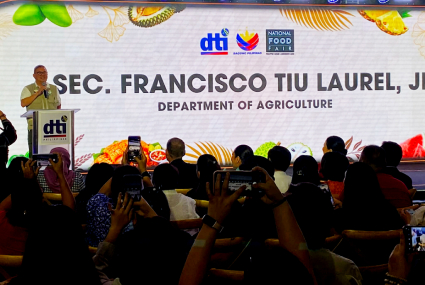
Agriculture Secretary Francisco P. Tiu Laurel Jr. underscored the vital role of micro, small, and medium enterprises (MSMEs) in boosting farm and fishery incomes, emphasizing their contribution to job creation and value-adding in one of the country’s most vulnerable sectors.
Speaking at the National Food Fair organized by the Department of Trade and Industry, Tiu Laurel said raw agricultural products are only the starting point, with MSMEs playing a crucial role in transforming these into higher-value goods.
“Raw produce is only the beginning. The real work starts when MSMEs step in—extending shelf life, widening market access, and increasing value,” he said.
The agriculture chief highlighted the participation of more than 320 enterprises from across Luzon, Visayas, and Mindanao, noting that their presence reflects the growing potential of local industries to turn agricultural outputs into competitive products.
“These are not just numbers—they represent ideas and innovation that elevate local harvests into sources of national pride,” he added.
Tiu Laurel pointed out that commodities such as rice, fish, coconut, and cacao serve as building blocks for broader value chains driven by processing, packaging, and product development.
He said strengthening MSMEs aligns with the directive of Ferdinand Marcos Jr. to transition Philippine agriculture from subsistence-based production to a more value-driven system. By linking farmers and fisherfolk with enterprises, more income can be retained within rural communities.
At the same time, the DA remains focused on keeping food affordable despite ongoing sector upgrades. Tiu Laurel noted that imported rice is currently priced between P55 and P60 per kilo, with expectations of a drop to around P50 pending a government-imposed price cap.
Prices of key protein sources have remained relatively stable, with tilapia at around P150 per kilo, bangus ranging from P240 to P260, pork at about P280 for imports and up to P360 for local supply, and chicken prices steady due to sufficient production.
“Step by step, we are working to restore balance in the market,” he said.
The agriculture chief also highlighted the potential of high-value industries such as coconut, describing it as a major source of livelihood, exports, and innovation.
He further cited the growing number of returning overseas Filipino workers who are venturing into the food business, turning their homecoming into entrepreneurial opportunities. Initiatives such as halal certification, he added, are helping local products access international markets.
Tiu Laurel ended by calling for stronger collaboration among stakeholders as the agriculture sector navigates rising input and logistics costs driven by elevated global oil prices.
NPO News Team | DA Press Office - PR