House launches unified response to energy crisis, opens multi-panel hearings

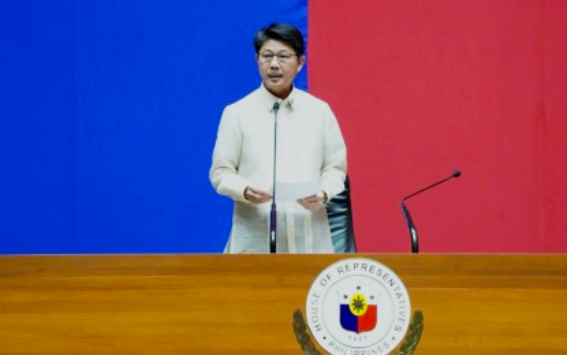
MANILA – Speaker Faustino Dy III on Wednesday underscored a unified, whole-of-government approach to address the ongoing oil price surge, as the House of Representatives opened the first of several high-level hearings on the energy crisis.
In his opening remarks, Dy said Congress is closely coordinating with the Executive branch to cushion the impact of global fuel price shocks driven by tensions in the Middle East.
“We are not working separately—we are working together. This is the kind of unified response our people expect,” he said, emphasizing the need for collaboration in delivering solutions for Filipinos.
The hearing marked the initial session of an expanded 13-committee panel tasked with crafting a coordinated legislative response. Lawmakers, Cabinet officials, economic managers, and regulators gathered to assess the situation and outline immediate and long-term strategies.
Dy acknowledged that while the crisis is beyond the country’s control, decisive action can help mitigate its effects.
“We may not be able to prevent this crisis, but we can respond effectively,” he said. “We are here not just to ask questions, but to deliver concrete solutions that people can feel.”
He outlined two key priorities: providing immediate, targeted assistance to affected sectors, and pursuing long-term reforms to strengthen energy security, economic stability, and supply resilience.
The multi-panel hearing, facilitated by Marikina Rep. Miro Quimbo, consolidates the work of various House committees to align legislative measures with ongoing executive actions.
Officials from key agencies presented data on supply risks and proposed policy interventions aimed at stabilizing prices and ensuring continued access to fuel.
Dy also highlighted the importance of coordination across government, thanking the Executive branch for its active participation.
“The presence of our partners from the Executive sends a clear message—government is united in responding to this crisis,” he said.
The 13 committees, collectively known as the Legislative Energy Action Development (LEAD) Council, are working under a single mandate to craft both immediate relief measures and structural reforms.
Quimbo, who chairs the Committee on Ways and Means, said the crisis has exposed the country’s heavy dependence on imported fuel, with nearly all supply sourced from abroad and only one refinery still operating domestically.
He pointed to rising pump prices—gasoline nearing PHP110 per liter and diesel approaching PHP130—as clear indicators of the crisis’ impact on households and key industries.
Citing estimates from the Bangko Sentral ng Pilipinas, Quimbo warned that every USD10 increase in Dubai crude above the USD80 benchmark could push inflation higher by around 0.4 percentage points.
He stressed that the council’s work goes beyond immediate relief, aiming to drive long-term reforms in energy security, supply systems, and renewable energy development.
“This is not just a response mechanism—it is a platform for reform that will help us withstand future energy shocks,” Quimbo said.
He also emphasized the need to support the middle class, which remains vulnerable to rising costs but is often excluded from government assistance programs.
The LEAD Council is expected to address the needs of multiple sectors, including agriculture, transport, energy, industry, overseas workers, and the middle class, as part of a comprehensive national response.
“This crisis affects all sectors of society,” Quimbo said. “Our response must be equally broad, coordinated, and forward-looking.”
NPO News Team | Philippine News Agency - PR