Philippines boosts global trade push after WTO ministerial gains

The Philippines is intensifying efforts to strengthen its position in global trade following gains at the 14th World Trade Organization (WTO) Ministerial Conference, Agriculture Secretary Francisco P. Tiu Laurel Jr. said.
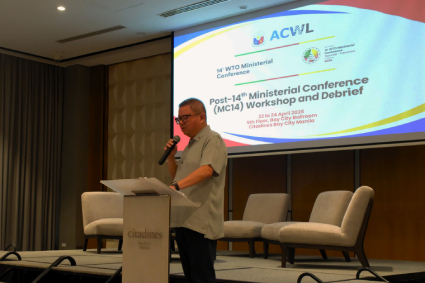
Speaking at a post-ministerial workshop on April 24 in Pasay City, Tiu Laurel emphasized that the WTO remains relevant despite rising geopolitical tensions and economic uncertainty. He noted that the conference demonstrated how the multilateral trading system can still produce meaningful outcomes.
Among the key achievements was progress on fisheries subsidies. Tiu Laurel highlighted the adoption of an outcome document that supports sustainability goals while proving that global negotiations can succeed with strong political will and leadership.
The conference also pushed forward discussions on fisheries rules, advanced the implementation of the Fisheries Subsidies Agreement, and introduced measures aimed at supporting smaller economies. It further developed provisions granting developing countries greater flexibility in sanitary and technical trade regulations.
However, Tiu Laurel acknowledged that challenges remain, particularly in agriculture and development, where consensus continues to move slowly. He pointed to near agreement on extending the e-commerce moratorium and gradual reform discussions as signs of cautious progress.
He also commended the Philippine delegation for its role in bridging gaps during critical negotiations. Trade Undersecretary Allan B. Gepty led international trade policy efforts and coordinated interagency positions, while Agriculture Undersecretary Asis G. Perez helped facilitate negotiations on fisheries subsidies, working to narrow differences among member states.
Looking ahead, Tiu Laurel said the country’s priority is to translate these international developments into concrete domestic actions. He stressed the need for unified national positions, sustained engagement in Geneva, and strong coordination among government agencies.
He added that alignment across institutions will be crucial as WTO negotiations continue, especially on reform and agriculture. The workshop, he said, helped clarify priorities and map out next steps.
Despite ongoing reforms, Tiu Laurel acknowledged resistance to policy changes within the agriculture sector. Still, he maintained that the WTO remains essential to expanding trade and economic growth.
To stay competitive, he said the Philippines must focus on reducing production costs, improving market access, and ensuring product quality.
As the global trade environment evolves, the Philippines aims to take a more active role. The key challenge will be maintaining momentum while turning international agreements into tangible local benefits.
NPO News Team | DA Press Office - PR