DOST Pushes Innovation in Non-Woven Textiles to Strengthen Philippine Manufacturing and Industrial Growth

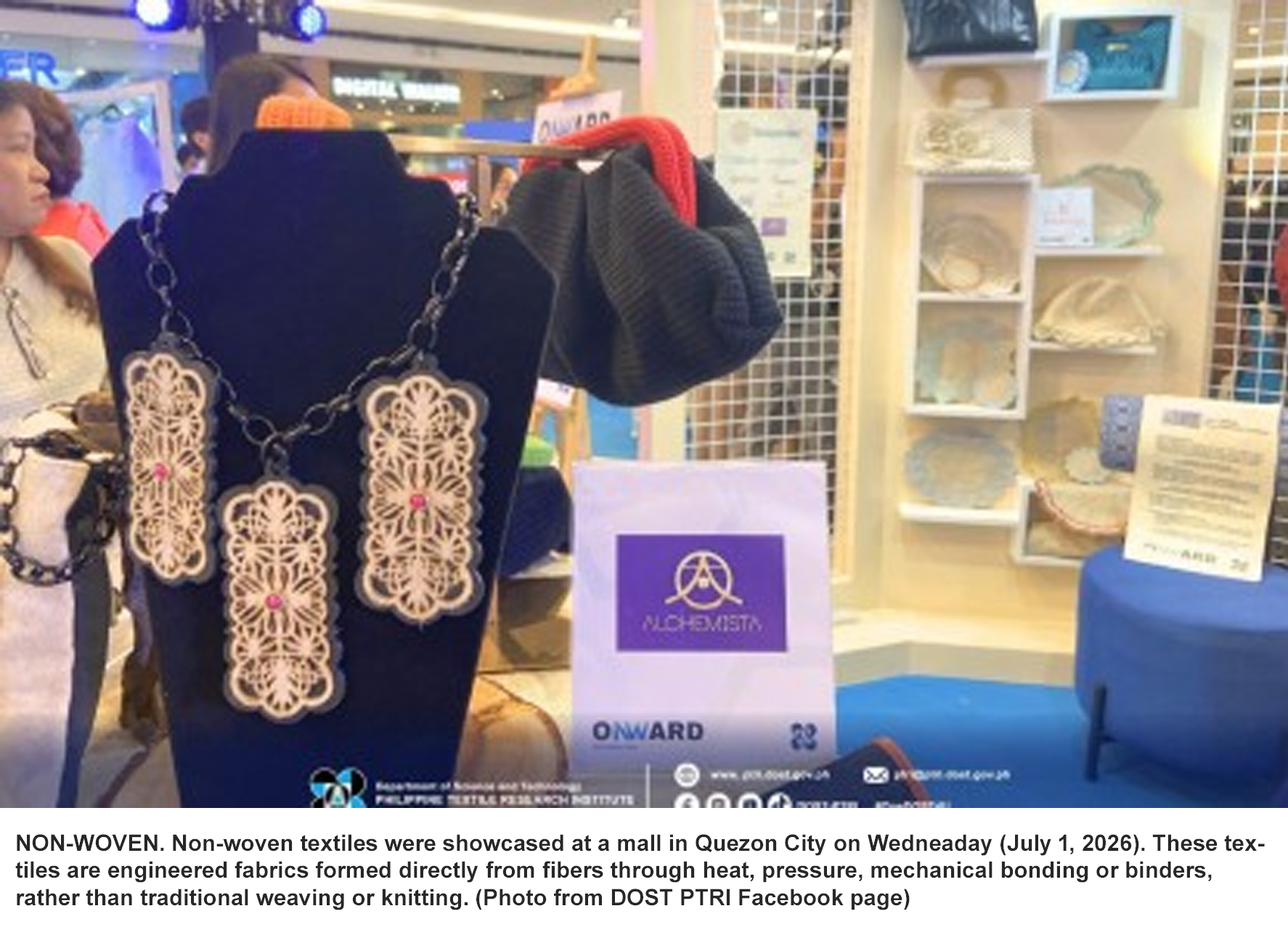
MANILA, Philippines — The Department of Science and Technology (DOST) has intensified its campaign to promote the country's non-woven textile industry, showcasing innovative materials and their wide-ranging industrial applications during an exhibit held at a mall in Quezon City on Wednesday.
In a video message, DOST Secretary Renato U. Solidum Jr. emphasized that textiles are no longer limited to clothing and garments but have become vital components in modern industries that support public health, infrastructure, agriculture, environmental protection, and manufacturing.
"When we hear the word textiles, we often think of clothing and garments. But textiles are much more than what we wear," Solidum said.
Unlike conventional woven fabrics, non-woven textiles are engineered directly from fibers using heat, pressure, mechanical bonding, or chemical binders. This manufacturing process enables the production of lightweight, durable, and highly specialized materials designed for various industrial applications.
According to the DOST, non-woven textiles are now being utilized in healthcare products, food safety packaging, air and water filtration systems, road and building reinforcement, agricultural protection, hygiene products, and transportation technologies. Their efficient production process makes them highly versatile, cost-effective, and suitable for next-generation manufacturing.
The agency, together with its research and industry partners, has already developed several non-woven textile technologies tailored for sectors such as healthcare, construction, agriculture, mobility, and environmental filtration.
Further strengthening the country's innovation ecosystem, the DOST announced that it will officially open the Non-Woven Textile Innovation Center at its Bicutan, Taguig compound by January 2027. The facility aims to accelerate research and development, support local manufacturers in creating application-specific materials, reduce dependence on imported products, and enhance the global competitiveness of Philippine-made textile innovations.
Solidum highlighted that advances in textile engineering now make it possible to develop materials with customized properties, including enhanced mechanical strength, thermal insulation, air permeability, filtration efficiency, and durability that meet the specific requirements of different industries.
The DOST chief also encouraged stakeholders to broaden the country's perspective on textiles beyond the apparel sector by harnessing indigenous natural fibers and sustainable raw materials for high-value industrial products. He likewise called for stronger collaboration among government agencies, research institutions, manufacturers, and private industries to accelerate innovation and expand market opportunities.
As the Philippines continues to pursue science-driven industrialization, the DOST believes that investing in advanced textile technologies will not only strengthen local manufacturing but also create new economic opportunities, improve sustainability, and position the country as a competitive player in the global non-woven textile industry.
NPO NEWS TEAM I PNA-PR