DA Revives ‘Food Lane’ Program to Secure Food Supply Amid Energy Crisis

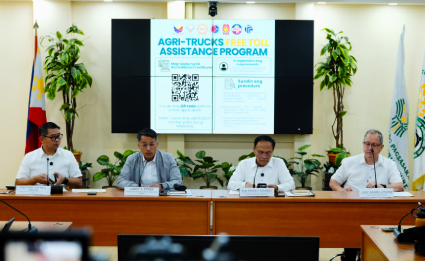
The Department of Agriculture (DA) has relaunched its Food Lane program to ensure the smooth transport of agricultural products and help stabilize supply and prices, as the government addresses the effects of a national energy emergency.
The initiative follows Executive Order No. 110 issued by Ferdinand R. Marcos Jr., which calls for a coordinated government response to mitigate the impact of global fuel supply disruptions. A key component of the DA’s strategy is the Agri-Trucks Toll-Free Program, implemented in partnership with the Department of Transportation and the Toll Regulatory Board. The program grants full toll fee exemptions to accredited agricultural transport vehicles.
This enhanced approach builds on the previous Food Lane Project, which only offered toll rebates. By upgrading to full exemptions, the DA aims to significantly cut logistics costs for farmers, traders, and distributors, while ensuring faster and more efficient delivery of essential goods across major expressways.
“Food is a basic necessity, and it is our responsibility to maintain stable supply and affordable prices,” said Roger Navarro. He added that the initiative also seeks to protect farmers’ incomes, support stakeholders across the agricultural value chain, and safeguard consumer welfare.
Despite having over 4,000 registered agri-truckers, only 1,162 currently hold valid accreditation, limiting access to the program’s benefits. To address this, the DA is working to boost participation by simplifying registration, expanding on-site enrollment, and speeding up approval processes.
Agriculture Secretary Francisco P. Tiu Laurel Jr. emphasized the urgency of the measure, noting that maintaining efficient food supply chains is critical amid rising fuel risks. “Every delay in transport leads to higher costs and possible shortages. We must keep food moving,” he said.
Meanwhile, Arrey Perez, Undersecretary for Agri-Industrial Marine Systems and head of the Food Lane program, said the initiative is part of the administration’s broader UPLIFT Tulong sa Agri Sector package, aimed at supporting farmers, fisherfolk, and food producers during challenging times.
Under updated guidelines, applications can now be approved within the same day, with toll exemptions activated within 24 hours. The system incorporates digital registration, QR-coded accreditation, and RFID enrollment to allow seamless verification across major tollways such as North Luzon Expressway (NLEX), South Luzon Expressway (SLEX), and Metro Manila Skyway, reducing delays at checkpoints and toll gates.
Initial implementation will focus on key agricultural corridors in Luzon, particularly Central Luzon, CALABARZON, and the Cordillera region, where large volumes of food products are transported daily to urban markets.
The policy highlights the growing importance of logistics in ensuring food security. By lowering transport costs and minimizing delays, the government aims to shield both producers and consumers from the effects of global energy uncertainties.
NPO News Team | DA Press Office - PR